December 22, 2025
Loading a moving truck the right way protects your belongings saves space and reduces stress. Learn professional stacking techniques used by movers.

Tell us about your move and we’ll send you a quick, no-obligation quote. Our team makes it easy to plan your next move with trusted local help and transparent pricing.
Packing a moving truck isn’t just a chore—it’s a craft. When done well, it protects your belongings, saves you space, reduces stress, and keeps your drive much safer. At Thumbs Up Moving Labor, our crews load and unload rental trucks every day, and we’ve learned that technique matters far more than strength. Whether you’re moving across town or across the country, mastering the “art of the stack” will give you a smoother, more organized experience.
Below, you’ll find clear, actionable tips to help you load like a pro. And if you ever feel the process is too much, you can get a free quote today to have our team handle the heavy lifting for you.
A well-packed truck isn’t about squeezing everything in—it’s about creating balance, structure, and stability. When weight is distributed correctly and items are secured properly, you reduce the risk of shifting, breaking, or struggling with an unbalanced drive. This is why many homeowners and renters choose to hire movers to load trucks while still driving their own rental vehicle.
Before lifting anything, you need a game plan. These are the fundamental principles our labor-only movers rely on:
1. Build a solid base layer
Heavy items should anchor the truck. Start with appliances, dressers, chests, and other sturdy pieces. Keep them flush against the front wall of the truck to balance the load and provide a strong foundation for stacking boxes.
2. Balance weight evenly
A properly packed truck feels stable when braking and turning. Spread heavy items left to right and avoid clustering weight on one side. This protects your belongings—and your driving experience.
3. Use consistent, well-labeled boxes
Uniform boxes stack neatly and reduce gaps. Place heavier boxes at the bottom and lighter ones on top. Fill all empty space to prevent movement during transit. Your stack should feel tight, not loose.
4. Protect surfaces and edges with pads and wrap
Furniture pads and stretch wrap prevent scratches and add friction that helps items stay in place. Wrap anything with fragile corners or delicate surfaces. This small step prevents big headaches later.
5. Strap down each section before moving on
Instead of waiting until the entire truck is loaded, secure each layer as you build it. This keeps your stack stable and prevents items from shifting out of position.
6. Handle fragile items with intention
Pack delicate items inside clearly marked boxes. Keep them near the top of your stack and avoid placing anything heavy above them. Fragile boxes should also be close to the back of the truck for easy unloading.
7. Avoid rushing the loading process
Slow, steady, intentional movement wins. Thoughtful loading reduces mistakes, injuries, and damage. If you’re unsure how to approach a tricky item, you can always call us for guidance or help.
Once you’ve mastered the basics, take your truck stacking to the next level with these professional techniques used by Thumbs Up Moving Labor crews every day:
1. Create vertical walls of furniture
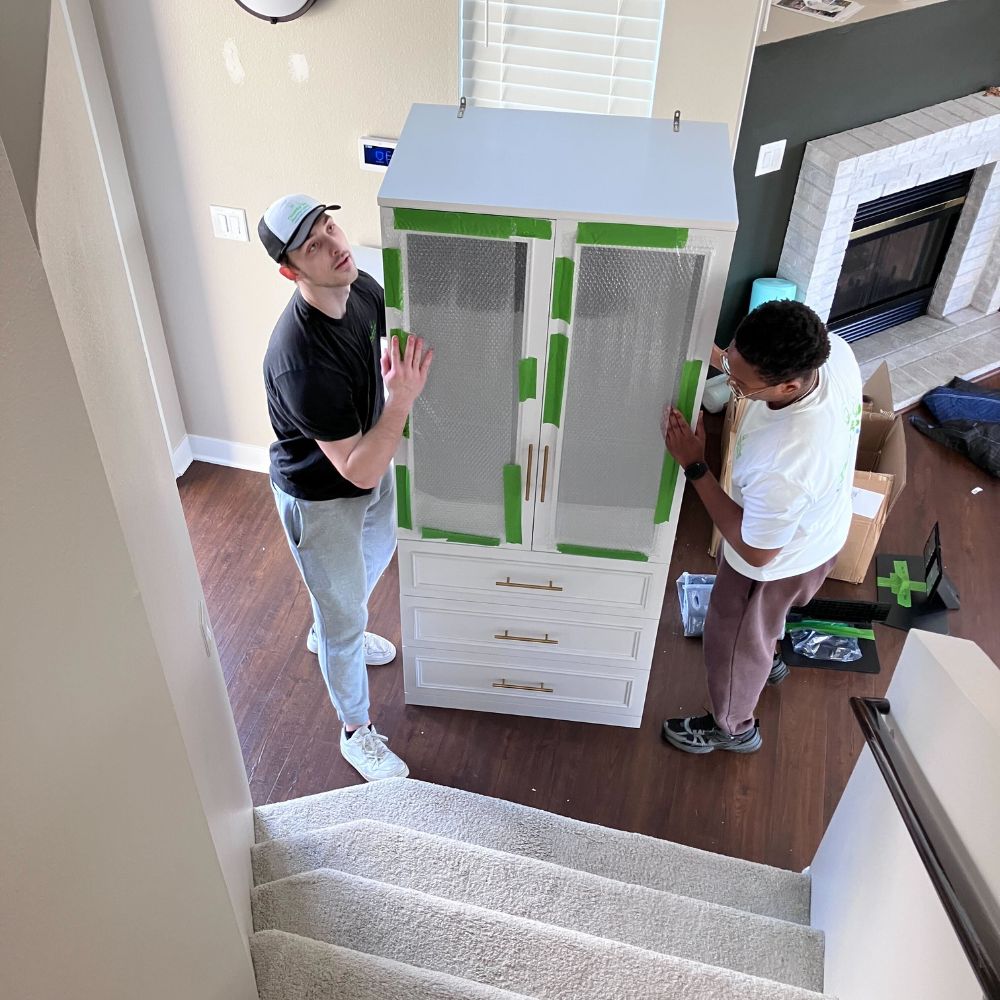
Tall items like wardrobes, bookshelves, and headboards act as stabilizers. Align them along the truck walls to create protective barriers that support the rest of your stack.
2. Fill dead space with soft items
Use pillows, blankets, and bedding to fill gaps around larger furniture. These soft items prevent movement and add cushioning.
3. Keep essential tools accessible
Avoid burying items you’ll need immediately—toolkits, cleaning supplies, hardware bags, and day-of essentials. Keep them toward the back of the truck for easy access during unloading.
4. Use mattresses as shock absorbers
A mattress can act as a protective barrier between furniture pieces, reducing pressure points and preventing items from rubbing during transit.
5. Follow the “no stack” rule on delicate pieces
Never stack heavy items on TVs, artwork, glass, instruments, or lightweight furniture. These pieces should stay on top or stand upright against a wall with proper padding.
6. Know when the job requires experts
Even with the best advice, loading can be physically demanding and mentally overwhelming. Our trained crews bring experience, speed, and precision. When you meet our team, you’ll understand how effective professional technique can be.
And here’s the honest truth:
If this sounds too complicated, hire our experts in Tucson, Phoenix, or Bellingham to do the packing and unpacking for you!
With our services, you choose exactly what you need—loading, unloading, or both. It’s simple, flexible, and built around your move.

Jason is passionate about business, family, and making the most out of this life. He grew up in the small town of Snohomish in Washington.